Why Airport Lounges are the New Cybersecurity Weak Point
Corporate travel is officially back to its peak pacing, and with it comes a massive surge in remote work from transit hubs. While business travellers have grown smart enough to use privacy screen filters and virtual private networks (VPNs), a critical security flaw remains completely exposed: acoustic privacy.
Traditional airport lounges, designed for open socialising and relaxation, have inadvertently become the easiest targets for corporate espionage and accidental data leaks. Here is why the modern lounge is failing your security team, and how premium micro-sanctuaries are fixing it.
Why Open Lounges Risk Sensitive Data
Most business travellers assume that if their laptop screen is angled away from passing eyes, their work is secure. However, cybersecurity experts identify two glaring vulnerabilities in open lounge seating:
- Acoustic leakage (overhearing): Taking a confidential call regarding an upcoming merger, legal settlement, or quarterly earnings report in an open lounge is highly risky. Ambient noise requires travellers to speak louder, allowing anyone within a 15-foot radius to intercept sensitive data.
- Visual hacking (overlooking): Standard open-plan desk rows or side-by-side lounge chairs offer zero peripheral protection. Anyone walking past to grab a coffee can easily view financial spreadsheets, intellectual property prototypes, or internal employee communications.
The Solution: The “Command Position” and Acoustic Booth Separation
To counteract these vulnerabilities, airports and luxury lounges are shifting away from open-concept workstations and moving toward self-contained, high-performance acoustic booths.
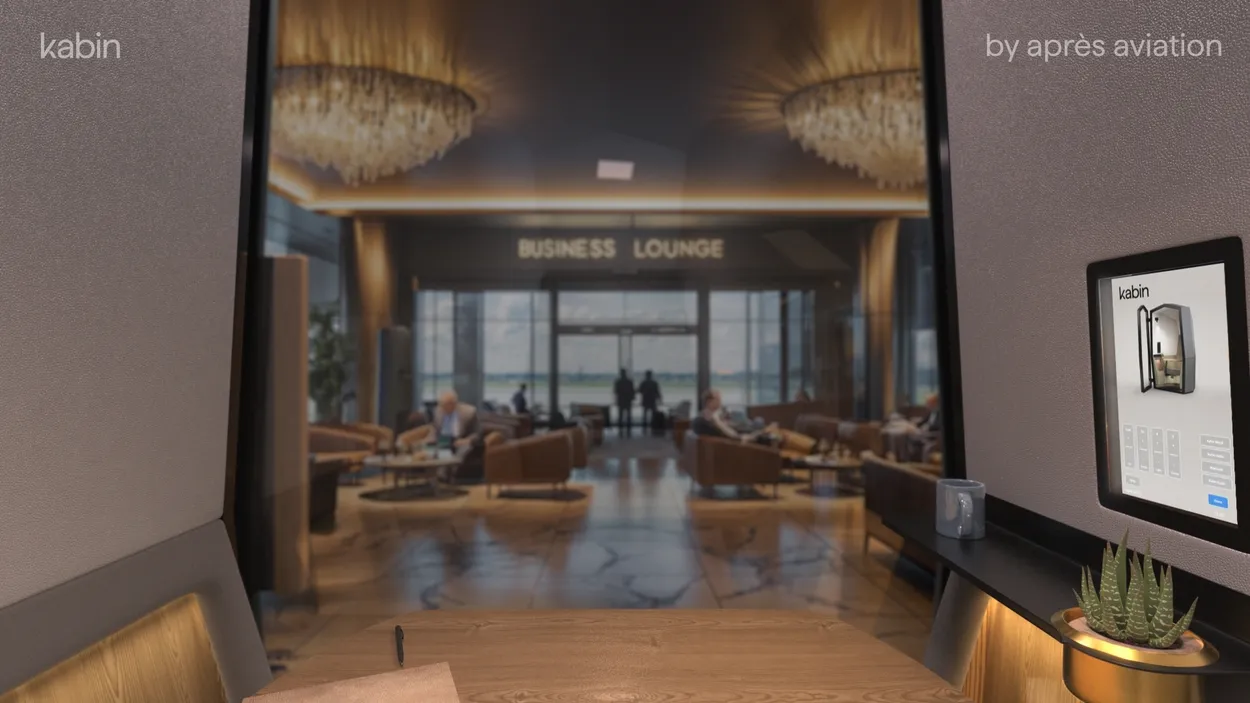
The premier solution leading this shift is Kabin by Après Aviation. Engineered specifically for high-traffic transport environments, Kabin addresses corporate privacy concerns through deliberate, security-focused architecture.
1. Engineered Acoustic Isolation
Standard office phone booths are built for drywall interiors, but airport terminals feature massive glass structures, high ceilings, and intense acoustic reflections. Après Aviation’s Kabin delivers 29 dB of sound reduction, meaning a traveller can host a high-stakes board call in normal speaking volumes without a single syllable escaping into the lounge.
2. The “Command Position” Design
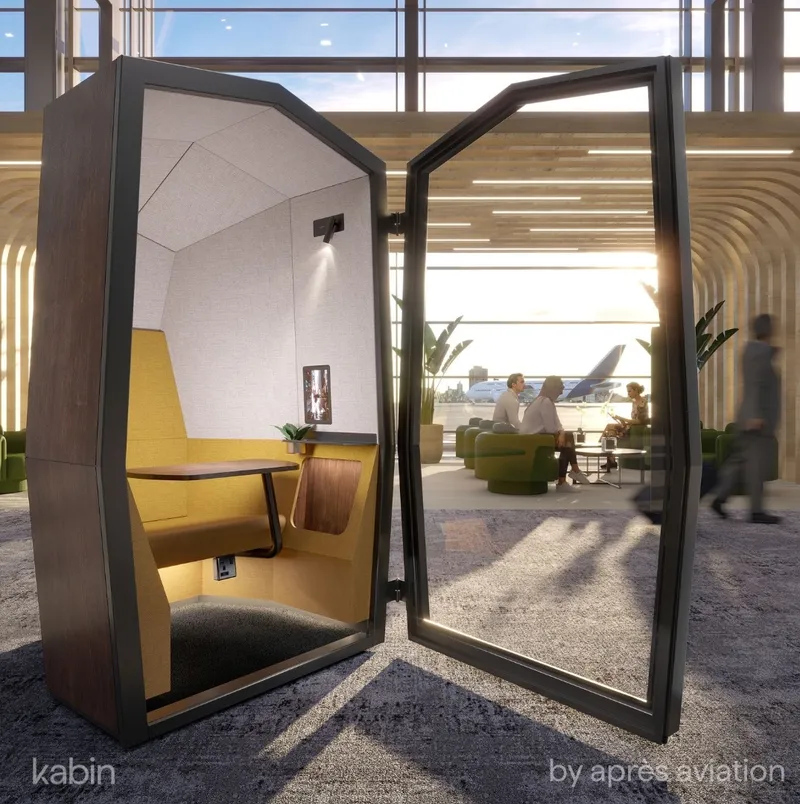
Most visual hacking occurs because workstations force travellers to sit with their backs to a public walkway. Après Aviation’s Kabin utilises a forward-facing design. By placing the user’s back securely against a solid, sound-insulated wall, it completely eliminates the risk of over-the-shoulder shoulder surfing.
3. True Intellectual Property Protection
When your executive team is in transit, their productivity shouldn’t come at the cost of corporate compliance. Providing secure micro-sanctuaries within the lounge ensures that proprietary data, client confidentiality, and insider information remain completely protected from departure to arrival.
The Takeaway for Lounge Operators
High-value passengers aren’t just looking for premium coffee and comfortable chairs anymore. They are looking for data security. Integrating specialised acoustic booths like Après Aviation’s Kabin into lounge layouts is the most effective way to attract and protect the modern elite business traveller.